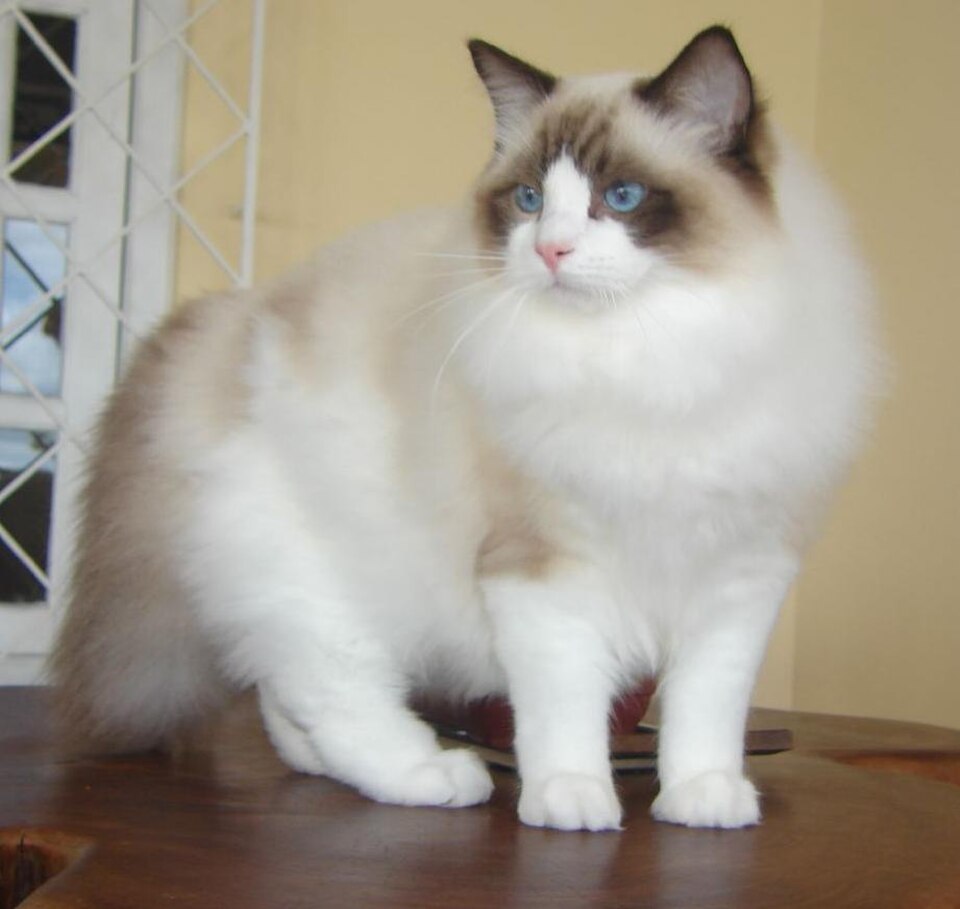
About the Ragdoll
The Ragdoll was developed in California in the 1960s by breeder Ann Baker, who crossed a white longhaired cat named Josephine with other cats to produce a breed known for its large size, striking blue eyes, and remarkably relaxed temperament.
The name "Ragdoll" comes from their habit of going completely limp when picked up — a trait that made them an instant hit with families and children.
Temperament and personality
Ragdolls are the closest thing to a dog in cat form. They follow their owners around the house, greet them at the door, and often learn to play fetch. They're patient, gentle, and rarely use their claws — making them excellent with children.
- Docile: Go limp when picked up — hence the name.
- Affectionate: Love being near their people, often sleeping on the bed.
- Patient: Tolerate handling exceptionally well.
- Quiet: Soft voices and rarely meow loudly.
Size and appearance
Ragdolls are one of the largest domestic cat breeds, standing 9–11 inches tall and weighing 12–20 pounds. They have a semi-long, plush coat with color-point markings and striking blue eyes. Males are noticeably larger than females.
They're slow to mature — Ragdolls don't reach full size until they're about 3 or 4 years old.
Care and grooming
Ragdolls need brushing two to three times a week to prevent matting, especially around the hindquarters and belly. They're generally healthy, but they are prone to hypertrophic cardiomyopathy (HCM), so buying from a breeder who screens for it matters.
Because they're so trusting, Ragdolls should never be allowed outdoors unsupervised — they lack the survival instincts of other breeds.
Is a Ragdoll right for you?
Ragdolls are ideal if you want a large, affectionate, low-maintenance cat that gets along with everyone. They're not ideal for people who want an independent, outdoorsy cat, or for households that are away for long stretches.
Naming your Ragdoll
Ragdolls suit soft, sweet names — think Luna, Bella, Milo, or Willow. Try our generator to browse by vibe.