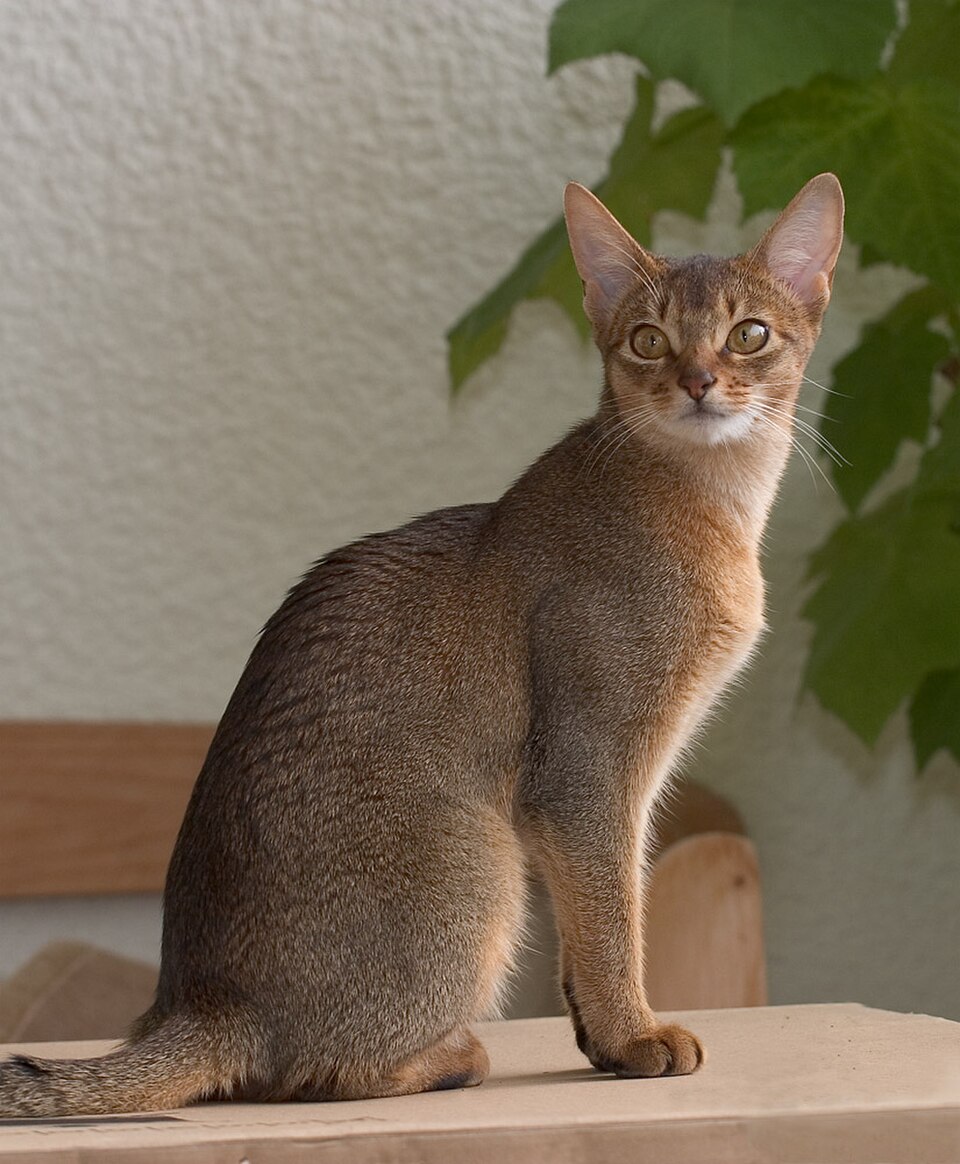
About the Abyssinian
Despite the name, the Abyssinian isn't actually from Abyssinia (modern-day Ethiopia). The breed was developed in Britain in the late 1800s from cats brought back from East Africa — likely descendants of ancient Egyptian cats kept as temple animals.
They're one of the oldest known cat breeds and are prized for their distinctively ticked coat — each hair has multiple bands of color, giving the coat a shimmering, wild appearance similar to a cougar or rabbit.
Temperament and personality
Abyssinians are one of the most active and curious cat breeds in the world. They're into everything — shelves, cabinets, sinks, your shoulders. They need constant stimulation and get bored quickly without toys, climbing structures, or a companion.
- Active: Need serious playtime every day.
- Curious: Investigate everything in the house.
- Intelligent: Learn tricks and open doors.
- Social: Bond deeply with their humans.
Size and appearance
Abyssinians stand 8–10 inches tall and weigh 6–10 pounds. They have a sleek, muscular body, large ears, and almond-shaped eyes that are often green or gold. Their ticked coat comes in four main colors: ruddy, red, blue, and fawn.
Their appearance is often described as "wild" — like a miniature cougar.
Care and grooming
Their short ticked coat needs only weekly brushing — one of the easiest coats to maintain. Their high energy means they need plenty of vertical space and interactive toys to stay happy.
Health-wise, they're prone to gingivitis, progressive retinal atrophy, and a kidney condition called renal amyloidosis. Reputable breeders screen for these.
Is an Abyssinian right for you?
Abyssinians are ideal if you want an active, engaging, dog-like cat and have time for daily play. They're not ideal for people who are away often, want a lap cat, or prefer a quiet household.
Naming your Abyssinian
Abyssinians suit adventurous, distinctive names — think Zara, Simba, Nala, or Rufus. Try our generator to browse by vibe.